
Every year, sometime between the last frost and the first genuinely warm week, the same shelf drama plays out: the heavy cream that saved your face in January suddenly sits on it like a coat in April, the rich cleanser leaves a film, and someone on the internet declares a date — this is when you switch to your spring routine. The research behind this guide asked the seasonal question and then, tellingly, wandered off into the real anxieties: why does my skin look so bad in the winter, what hydrates your face the most, which serums can’t be mixed, is four products too much, how long does skin take to adjust? This is Guide #26 of The Radiant Routine, the opening chapter of Wave 6, and its thesis fits in one line: skin doesn’t read a calendar; it reads humidity and temperature. The transition isn’t a date or a haul. It’s a sequence of small swaps, made by signal, one at a time.
Quick note: the one product below carries an affiliate link — our full disclosure is at the end of this article.
The Quick Answer
Start the transition when the air changes, not the month: sustained milder nights, indoor heating cycling off, your skin feeling less tight by midday. Then swap in this order, one change every two to four weeks: first the cleanser (rich and creamy → lighter gel or milk), then the moisturizer’s weight (heavy cream → lighter cream or gel-cream, keeping the rich one for nights and dry zones a while longer), then reintroduce anything you paused for winter (this series’ Guide #22 laid out the one-at-a-time reintroduction logic), while SPF quietly becomes the most important product on the shelf as the UV index climbs. What does not change: your hydration layers, your gentleness, and your patience. A full skin cycle is roughly four weeks in a young adult and slower with age — which is why “how long does it take to adjust to a new routine?” and “when do I transition?” are secretly the same question, answered below.
Why Winter Skin Looks Bad (The “Winter Uglies,” Explained)
The research’s most plaintive question — why does my skin look so bad in the winter? — has a mechanical answer, not a moral one. Cold air holds little moisture; heated indoor air holds less; the gradient pulls water out of your skin all day (dermatologists measure this as transepidermal water loss, and it rises as humidity falls). Add long hot showers stripping surface oils, wind, and the heavier products themselves sitting visibly on dry texture, and January skin is simply skin losing a physics argument. The American Academy of Dermatology’s cold-weather guidance reads like the counter-argument: gentle fragrance-free products, moisturizer applied to damp skin, lukewarm rather than hot water, and a bedroom humidifier as prevention rather than rescue.
And the tree’s sly follow-up — why do I look prettier in winter? — deserves its honest two-sided answer. Some people genuinely do: less UV, less sweat, less oil production, no humidity frizz in the skin’s surface light. Others get the opposite distribution. Both are the same physics, dealt to different skin types — which is the entire reason a universal “switch date” is nonsense and a personal signal is not.
What Hydrates Your Face the Most
Asked directly by the research, answered in layers, because hydration is a system, not a product. Water first (a humectant layer on damp skin pulls and holds water in the surface). Then the seal (a cream’s oils and occlusives slow the water’s escape — this is why the same moisturizer performs twice as well applied to damp skin as to dry). Then the environment (a humidifier in a heated bedroom defends all night; no cream fully compensates for 20% indoor humidity). Notice what this ranking implies for spring: as the air’s humidity rises, the environment starts doing more of the work for free, and the products can get lighter in exactly the order the Quick Answer gave. The transition is mostly your routine handing jobs back to the weather.
The Transition Sequence, Step by Step
Weeks 1–2: the cleanser. The richest, balmiest cleanser is usually the first thing that overstays — if your face feels filmed rather than comfortable an hour after washing, lighten this first. Everything else stays identical.
Weeks 3–4: the moisturizer’s weight, in the morning only. Swap the heavy day cream for a lighter one; keep the rich cream at night and on your driest zones (cheeks, around the nose) as long as they ask for it. Faces transition by zone, not all at once, and that’s normal.
Weeks 5–6: reintroduce what winter paused. If you shelved a retinoid or a stronger exfoliant during the cold months (Guide #22 explained why that shelving is wise), bring back one, at low frequency, buffered — not both in the same week. Spring skin is adjusting skin; treat it like Guide #23’s nails and don’t stack insults.
Throughout: SPF moves up the hierarchy. The UV index climbs before the warmth feels serious, and the single most aging exposure is arriving with the season (see the audit below). If winter let your sunscreen habit slide to “when I remember,” spring is when it becomes the morning’s non-negotiable layer.
How Long Skin Takes to Adjust (And Why One Swap at a Time)
The epidermis renews itself on a cycle of roughly 28 days in young adults, stretching toward six weeks and beyond with age. That cycle is the honest unit of skincare time: a product judged at day four has been judged on the skin you already had. It’s why this guide’s sequence spaces swaps two to four weeks apart — each change gets most of a cycle to declare itself, and if something irritates, you know exactly which change did it. The research also asked the question from the other side (“how long does it take to adjust to a new routine?”): same answer, same reason. Routines don’t fail at week one. They get abandoned there.
The Serum-Mixing Cluster, Answered Briefly (With a Cross-Link)
The loudest recurring questions in this tree weren’t seasonal at all — which two serums cannot be used together, what skincare should you never mix, can I use three serums at the same time — which tells you where the anxiety actually lives. Short version: this series devoted an entire guide to exactly this (Guide #2, “Which Serums Should Never Be Mixed”), and its map still stands: the pairs to separate are about irritation and deactivation (strong retinoids with strong acids in the same sitting for most people; vitamin C with certain partners depending on formula), not about danger — and the modern formulator has already solved half of them inside single bottles. Three serums at once is legal and usually pointless: layering beyond two actives mostly layers cost and irritation risk, not results. Apply the adjustment rule from the section above — introduce one, wait, judge — and the mixing question largely answers itself, because most “bad reactions to mixing” are actually two new products introduced in the same week.
Seven Steps, the 4-2-4, and Whether Four Products Is Too Much
The tree’s routine-size questions, in one honest sweep. The 7-step routine is a framework, not a quota — this series’ Guide #1 built a routine by function (cleanse, treat, moisturize, protect), and steps exist only where a function does. The 4-2-4 method (four minutes of oil-cleanser massage, two minutes of second cleanse, four minutes of rinsing, from Japanese skincare practice) is a cleansing ritual: harmless for most, pleasant for many, and supported by testimony rather than trials — your skin will not be able to tell it from a thorough 60-second double cleanse, and your evenings will. And is four skincare products too much? No — four is close to the functional minimum done properly. Count functions, not bottles. The shelf that’s “too much” is recognizable differently: three products doing one job, and none doing the sunscreen’s.
Two leftover questions from the tree, answered straight. Does your skin age faster if you don’t moisturize? Moisturizer does not stop intrinsic aging — nothing on a shelf does. Unmoisturized skin looks older (dryness exaggerates every line) and its barrier underperforms, so the honest sentence is: skipping moisturizer makes skin look and behave older without technically aging it faster. And what ages your skin the most? The sun, and it isn’t close: a widely cited clinical analysis (Flament et al., 2013, 298 women) concluded that UV exposure accounts for roughly 80% of visible facial aging signs — printed here with the house caveat that the authors worked for a cosmetics company (L’Oréal), and the figure is an estimate for fair skin, not a law of physics. Even discounted, it’s why this transition guide keeps returning to SPF: the most spring-relevant product is the one that was never seasonal.
The Layer That Never Leaves
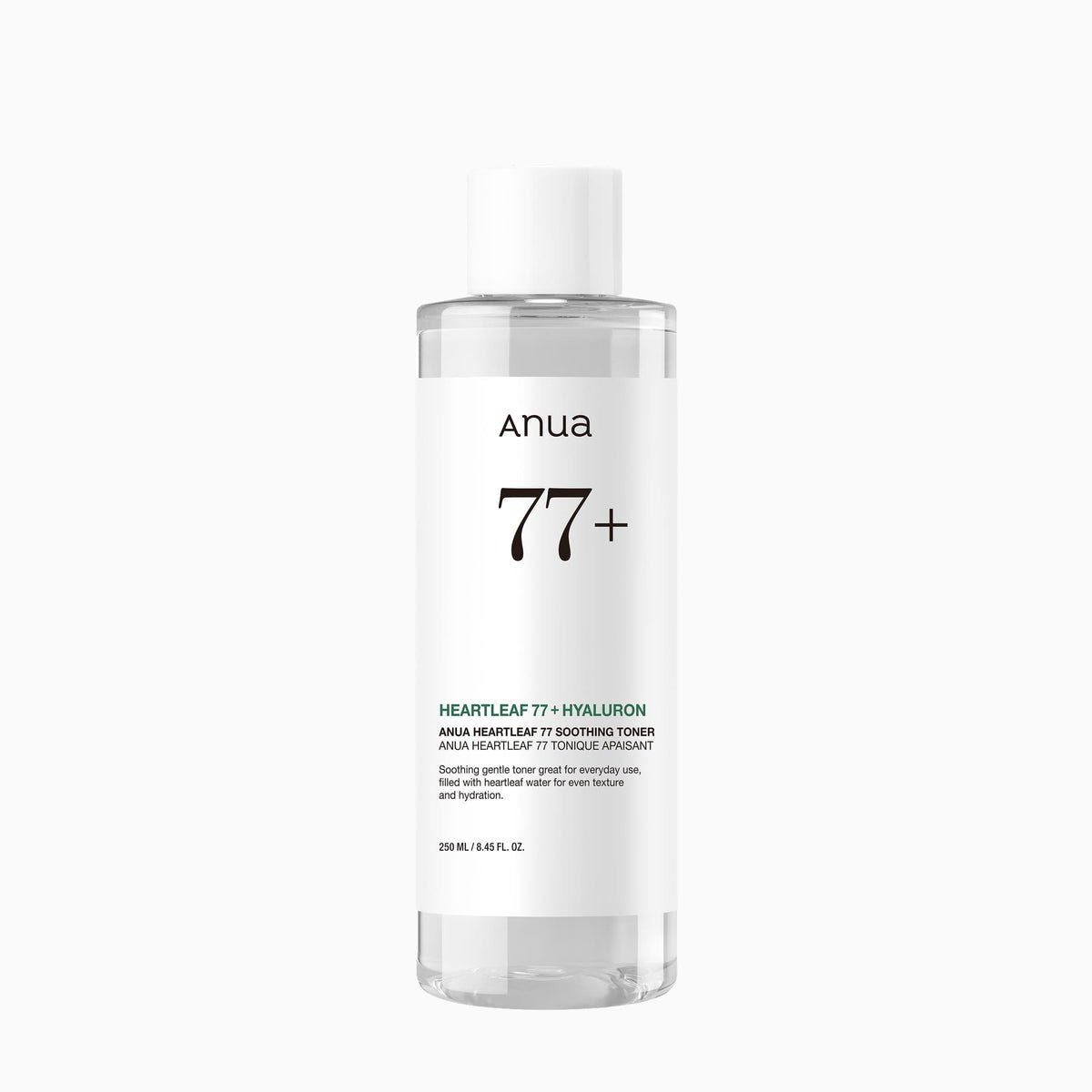
Anua Heartleaf 77% Soothing Toner (250 ml) — the bridge product of the transition, chosen because it’s the rare layer whose job description doesn’t change with the season. In deep winter it was this series’ calm-down layer under heavy cream (Guides #3, #16 and #22 all reached for it); in spring it becomes the hydration base under a lighter moisturizer, doing the humectant work of the system described above while the heavier products retire around it. Heartleaf (houttuynia) extract at 77%, a water-light texture, nothing occlusive to overstay into April. Routines transition best around an anchor that doesn’t move — this is the anchor this series keeps using, and the transition is a good moment to say why.
FAQ
When should I switch from my winter to my spring skincare routine?
By signal, not by date: when nights stay milder, the heating cycles off, and your skin stops feeling tight by midday. Then swap one thing at a time — cleanser first, morning moisturizer next, paused actives last — two to four weeks apart. Your skin reads humidity and temperature; the calendar is just a rumor about both.
How long does it take for skin to adjust to a new routine?
About one skin cycle: roughly 28 days in young adults, longer with age. Judge any change after three to four weeks of consistent use, and introduce changes one at a time so a reaction has an obvious culprit. Most “it didn’t work” verdicts are week-one verdicts.
What hydrates your face the most?
A system, in order: a humectant layer applied to damp skin, a cream to seal it, and an environment that isn’t fighting you (a humidifier in heated rooms). No single product out-hydrates that combination, which is why moisturizer on damp skin outperforms the same moisturizer on dry skin.
Can I use three serums at the same time?
You can, and you usually shouldn’t bother. Beyond two active layers, returns shrink while irritation risk grows. If you do layer, introduce each serum weeks apart (Guide #2 maps the pairs worth separating), and remember that a reaction after adding two products in one week is a mystery you created yourself.
Is four skincare products too much?
No — it’s close to the functional core: cleanser, one treatment, moisturizer, sunscreen. Count functions rather than bottles. Too much looks like duplication (three products doing one job) or omission (seven steps, no SPF), not like the number four.
Does skin age faster if you don’t moisturize?
Not literally — moisturizer doesn’t slow intrinsic aging. But dry skin shows lines more, feels tighter, and keeps a weaker barrier, so unmoisturized skin looks and behaves older. And the factor that demonstrably drives visible aging is UV (~80% of facial aging signs in the Flament analysis) — which is a sunscreen sentence, not a moisturizer one.
The Bottom Line
The winter-to-spring transition isn’t a new routine; it’s the same routine handing jobs back to the weather, one at a time. Lighten the cleanser when the film appears, lighten the morning cream when midday stops feeling tight, reintroduce paused actives like a diplomat rather than an army, keep the hydration anchor in place, and let SPF inherit the season. Give each swap its skin cycle before judging it, and by the time spring is undeniable, your shelf will already match it. Wave 6 continues with the question February asks every mirror: why makeup sits so badly on dry winter skin — and the routine that fixes the canvas before the color.
Sources & Further Reading
- American Academy of Dermatology — “Cold weather and your skin” (gentle fragrance-free products, moisturizer on damp skin, humidifier as prevention, when to see a dermatologist): https://www.aad.org/news/cold-weather-and-your-skin
- Flament et al. — “Effect of the sun on visible clinical signs of aging in Caucasian skin,” Clinical, Cosmetic and Investigational Dermatology 2013;6:221–232 (298 women; UV estimated at ~80% of visible facial aging signs; authors affiliated with L’Oréal): https://pmc.ncbi.nlm.nih.gov/articles/PMC3790843/
- Anua (official store) — Heartleaf 77% Soothing Toner product page (formula and usage): https://anua.com/products/heartleaf-77-soothing-toner
Affiliate disclosure: Glow & Vital participates in the Amazon Services LLC Associates Program and other affiliate programs. Links in this article are affiliate links — if you buy through them, we may earn a commission at no additional cost to you. Commissions never decide what we recommend; the reasoning for every pick is stated in the article itself. This content is educational and is not medical advice.
One Response