
Your makeup was perfect at 8 a.m. By lunch, the T-zone is shiny, the foundation has separated around your nose, and the blush has filed for early retirement. The usual response is to buy a “long-wear” version of everything. The cheaper truth: longevity is mostly order and technique — the right layers, in the right sequence, with the right wait times — plus two support products (primer and setting spray) that most people either skip or use at the wrong moment.
This guide is the full system: why makeup breaks down, what primer and setting spray actually do (including the label confusion nobody warns you about), the exact order, and the touch-up method that doesn’t wreck what’s left.
Quick note: the product picks in this guide include affiliate links — our full disclosure is at the end of this article.
The Quick Answer
Makeup lasts when each layer has a job and a moment to set. The order: moisturizer → sunscreen (let it set) → primer (pea-sized, targeted) → foundation in thin layers → powder pressed only where you get oily → setting spray from 6–8 inches, X and T pattern, left to dry untouched. Longevity enemies are sebum, heat, friction and overloaded layers — not your foundation. Blot before you ever re-powder.
Why Makeup Actually Fades
Your skin is not a wall; it’s a living surface that produces oil and sweat, warms and cools, and moves when you talk. Three forces do most of the damage:
- Sebum. Skin oil — concentrated in the T-zone — mixes with foundation through the day and gradually breaks the film down, which is why makeup separates first around the nose, forehead and chin while the cheeks still look fine. Oil production also peaks around midday, which is why the meltdown has a schedule.
- Heat, humidity and sweat. Warm skin + moisture softens and mobilizes every layer sitting on it; humidity is why the same routine survives October and dies in August.
- Friction and transfer. Phones, glasses, masks, hands, collars: makeup that hasn’t set is makeup that relocates.
Every step below exists to fight one of those three. If a tip doesn’t address oil, moisture or friction, it’s decoration.
Primer: What It Does (and Doesn’t)
Primer is a base layer between skincare and foundation. Depending on the formula it does one of three jobs:
- Blur/smooth — silicone-based primers temporarily fill and soften the look of pores and fine texture so foundation glides instead of gripping unevenly.
- Grip — tacky, gel-style primers give foundation something to hold onto, the longevity play.
- Correct/illuminate — tinted or radiant primers adjust tone or finish (glow under matte foundation, for example).
What primer does not do: replace moisturizer, replace sunscreen (same too-thin problem as makeup SPF — see our cushion guide), or rescue foundation applied too thickly. Application rules that matter more than brand: a pea-sized amount, pressed or smoothed only where you need it (T-zone for grip/oil; cheeks for blur), and give it a minute to set before foundation. Slapping foundation onto wet primer just mixes the two into a weaker film.
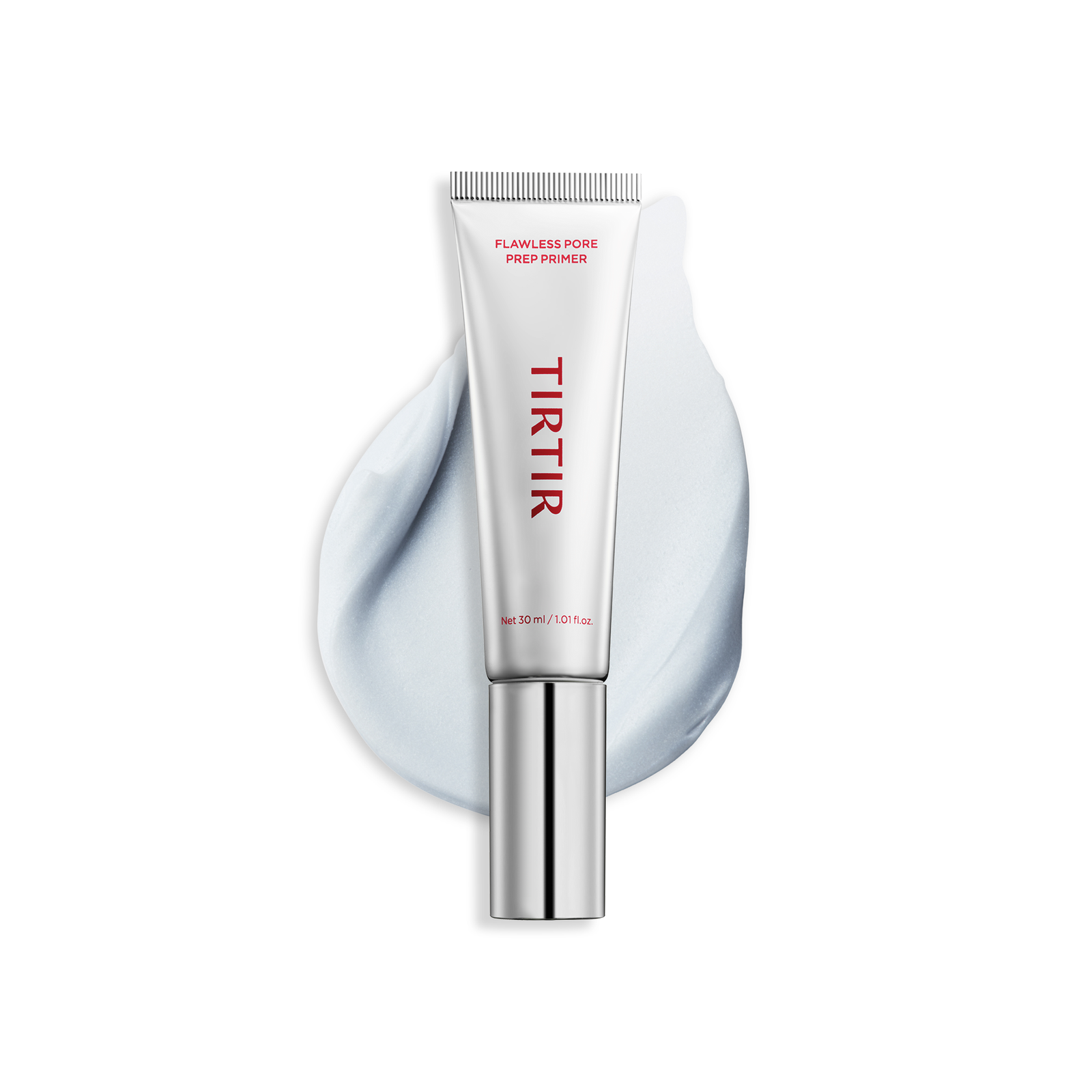
TIRTIR Flawless Pore Prep Primer — the primer step: TIRTIR’s pore-prep base for smoothing texture before foundation — the blur-and-grip layer for the T-zone and anywhere foundation usually grabs or settles. Pea-sized, targeted, one minute to set.
Setting Spray: The Label Confusion, Explained
Here’s the industry’s open secret: “setting spray,” “finishing spray” and “fixing spray” are not standardized terms — brands use them inconsistently, and expert sources openly disagree about which word means what. So ignore the front of the bottle and read the ingredient list:
- Film formers high on the list (acrylates copolymers, PVP and their relatives) = a true hold spray: it dries into a thin, flexible film that resists transfer and breakdown. This is the longevity product.
- Mostly water + humectants (glycerin, glycols) = a finishing/setting mist: it melts powdery layers together for a skin-like finish but adds little real hold.
Many modern sprays combine both. Application is universal, though: shake, hold 6–8 inches (15–20 cm) away, mist in an X and then a T pattern, and let it dry on its own — fanning is fine, touching is not. Apply mascara after the spray has dried, so solvents don’t smudge it. And a spray is not sunscreen, whatever the bottle hints: the mist is far too fine to deliver labeled SPF.
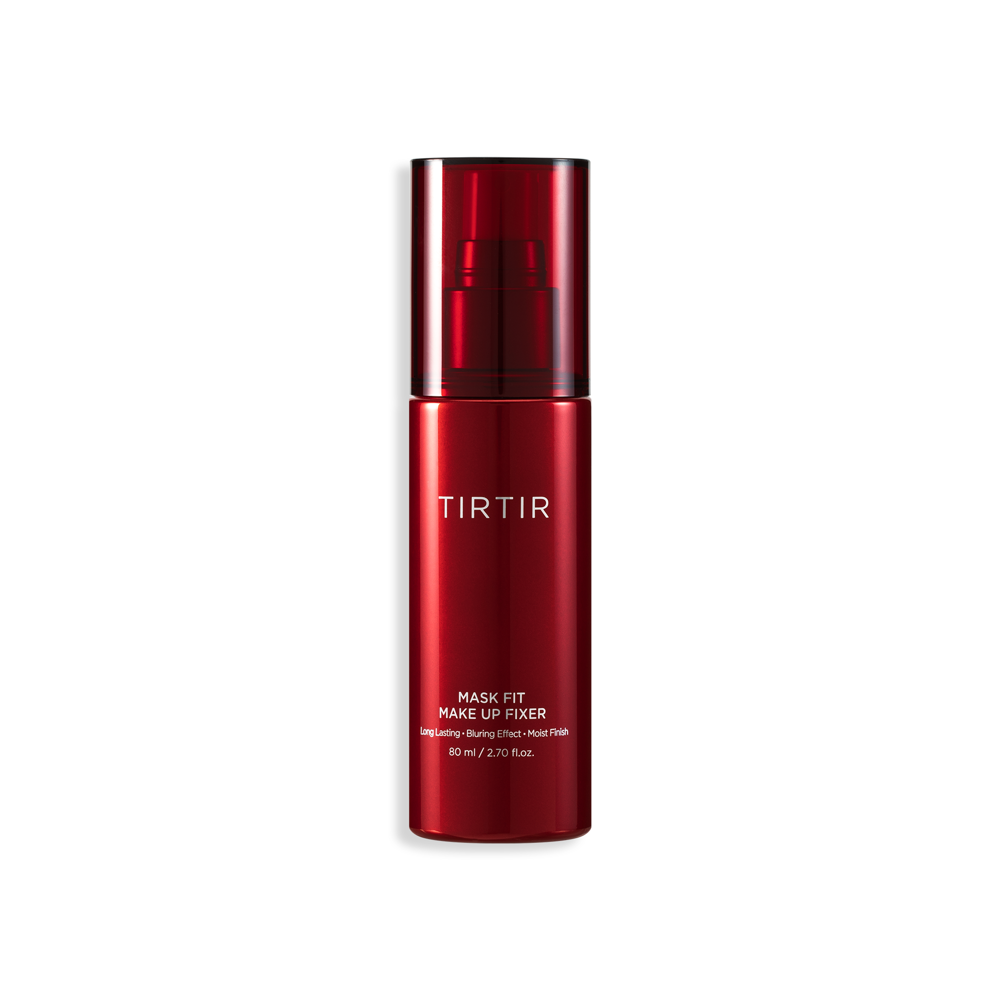
TIRTIR Mask Fit Makeup Setting Spray — the everyday finisher from our cushion guide: the mist that melts the layers together and adds flexible hold for normal days — office, errands, dinner. X and T, 6–8 inches, hands off while it dries.
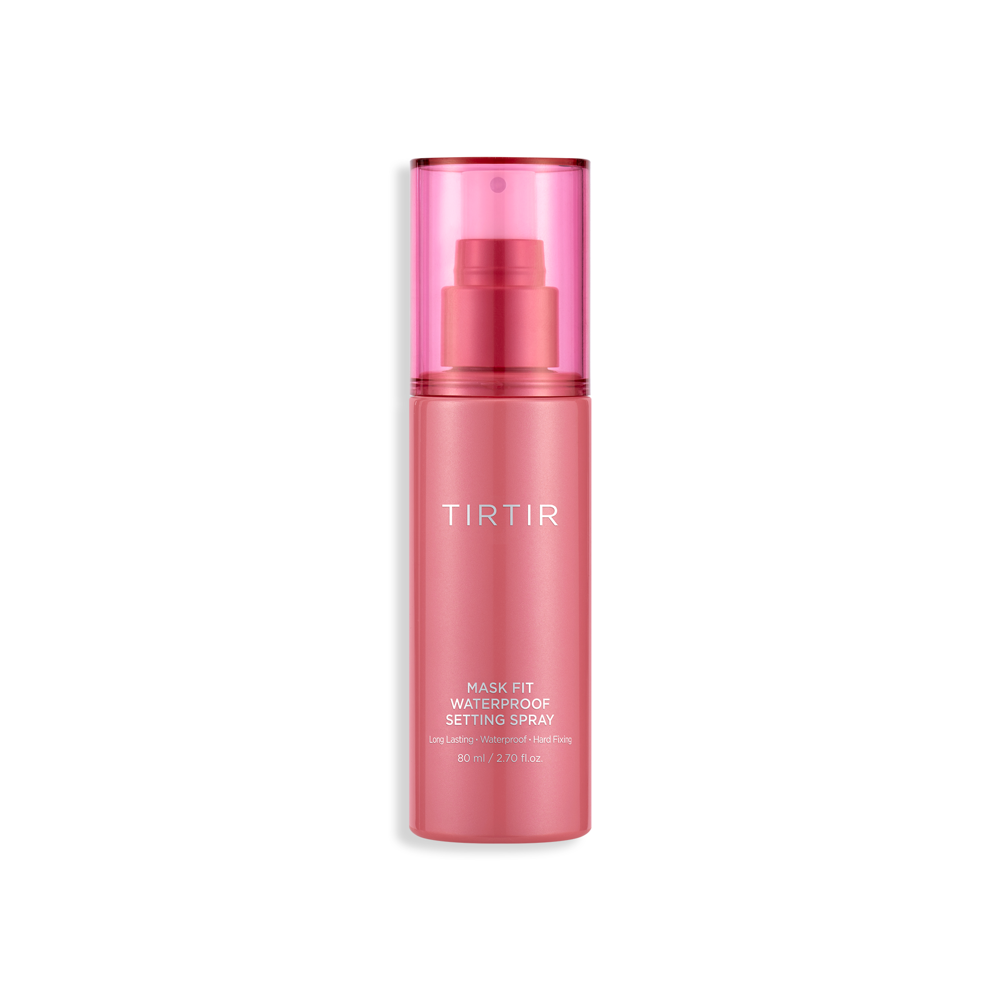
TIRTIR Mask Fit Waterproof Setting Spray — the heavy-duty sibling: the film-forming option for heat, humidity, events and long days — when the forecast (or the occasion) says the regular mist isn’t enough.
The Order That Works (Step by Step)
- Moisturizer. Hydrated skin grabs makeup evenly; dry, flaky skin sheds it. Give it a minute or two to absorb.
- Sunscreen. Two finger-lengths for face and neck; let it set several minutes (rushing here is the #1 cause of pilling under makeup).
- Primer. Pea-sized, targeted zones only; ~1 minute to set.
- Foundation. Thin layers, built where needed — thick coats break down faster than thin ones, always. (Our cushion and BB/CC guides cover choosing the base itself.)
- Concealer where needed, blended at the edges.
- Powder — pressed, not swirled. A puff or brush pressed into the T-zone and anywhere makeup creases; skip the cheeks if you like their finish. Powder everywhere is how a fresh base turns chalky and still fades.
- Color (blush, bronzer) — powders last longer over set base; creams last longer under a final light powder or spray.
- Setting spray. X + T, 6–8 inches, dry untouched. For events/humidity, the “sandwich” upgrade: a light mist after primer and a final mist at the end.
Total added time vs. your current routine: about three minutes of waiting. That waiting is the technique.
By Skin Type
- Oily: grip or mattifying primer on the T-zone, pressed powder there, film-former spray as the final step. Your midday move is blotting paper, not more powder.
- Dry: skip powder except where makeup creases; choose a humectant-rich finishing spray; primer should be hydrating, never mattifying.
- Combination: everything targeted — primer and powder only on the T-zone, spray everywhere.
- Mature: less powder (it settles into lines), thin foundation layers, and a flexible-film spray rather than a high-alcohol one that feels tight.
The Midday Touch-Up That Doesn’t Ruin Everything
- Blot first. Press blotting paper (or a tissue) on shiny zones to lift oil without lifting makeup.
- Then, and only then, a whisper of pressed powder on what’s still shiny.
- Optional: one light mist of spray to re-melt the surface.
The classic mistake — powder straight onto oil — grinds sebum and pigment into a patchy paste and guarantees the 3 p.m. separation you’re trying to fix.
Common Mistakes
- Primer over unset sunscreen — pilling, and both layers weakened.
- Foundation too thick — heavy films crack and migrate; thin layers outlast them.
- Powder swirled everywhere — chalky now, patchy later.
- Spray from 2 inches away — droplets, streaks, dissolved spots. Distance makes the mist.
- Touching the spray while it dries — you’ve just fingerprinted the film.
- Expecting spray to fix a skipped base routine — spray seals a system; it isn’t one.
Frequently Asked Questions
Do I need both primer and setting spray?
They do different jobs — primer prepares the surface, spray seals the result. If you buy one, match it to your failure mode: makeup sliding/separating early → primer; makeup fading/transferring late → spray.
Can setting spray go before foundation too?
Yes — a light mist after primer (the “sandwich”) adds hold for events. Let it dry tacky-dry before foundation, and still finish with the final mist.
Why does my makeup pill when I layer products?
Usually unset layers: sunscreen or primer not given its minute, or a water-based product over a silicone-heavy one. Thinner layers and wait times fix most pilling.
Does setting spray work on powder-only makeup?
Yes — it’s actually where the finish benefit is most visible: the mist melts the powdery look into skin while adding hold.
How do I make makeup last in heat and humidity?
The full system, waterproof-leaning spray, minimal layers, and blotting papers in your bag. Heavy makeup in humidity fails faster, no matter the products.
The Bottom Line
Longevity is a sequence, not a product: moisturize, sunscreen (set), primer (set), thin foundation, pressed powder where you’re oily, spray from a distance and don’t touch. Learn the ingredient-list trick — film formers high up = hold — and you’ll never be confused by a spray label again. Blot at midday; don’t re-powder over oil. That’s the whole discipline, and it costs about three extra minutes.
Sources & Further Reading
- Allure Philippines — Setting Spray vs. Fixing Spray: What’s the Difference?: makeup artists on the inconsistent terminology and why film-forming ingredients (acrylates copolymers) near the top of the list are what actually seal makeup. https://allure.ph/makeup/face/still-confused-heres-the-difference-between-setting-spray-and-fixing-spray/
- Beautyblender — Setting Spray vs. Finishing Spray: the blending-vs-locking distinction and matte/hydrating choices by skin type. https://beautyblender.com/blogs/beauty-101/makeup-finishing-spray-vs-setting-spray
- The Feminine Edit — Why Does My Makeup Look Worse After 2 Hours?: how skin oil mixes with foundation and breaks it down first in the T-zone, plus the small adjustments that fix it. https://thefeminineeditblog.com/why-does-my-makeup-look-worse-after-two-hours/
- Beauty Explained — Setting Spray vs Fixing Spray: What’s the Difference?: application technique — 15–20 cm distance, X and T patterns, spraying between layers for long-wear days. https://www.beauty-explained.com/blogs/blog/setting-spray-vs-fixing-spray-difference
Affiliate Disclosure
Glow & Vital is reader-supported. Some links in this article are affiliate links, which means we may earn a commission if you buy through them — at no additional cost to you. As an Amazon Associate, we earn from qualifying purchases. Affiliate relationships never determine which products we recommend; picks are based on ingredient research, formulation quality and fit for the guide’s purpose. This article is educational and is not medical advice.