
Somewhere between the third dry shampoo day and the conditioner that “used to work,” most heads reach the same suspicion: something is on this hair that washing isn’t removing. That suspicion has a name — buildup — and a tool built for it: the clarifying shampoo. The research behind this guide circled one worry from every direction: can you overuse it, what are the downsides, what happens if you use too much — with a supporting cast of dish soap, baking soda and the eternal question of whether you’re supposed to wash twice. This is Guide #24 of The Radiant Routine, Wave 5’s hair chapter, and it gives the category the treatment it rarely gets: clarifying shampoo is not a stronger version of your shampoo. It’s a different tool, with a correct frequency, a correct technique — and a genuinely short list of people who should barely touch it.
Quick note: the product below carries an affiliate link — our full disclosure is at the end of this article.
The Quick Answer: How Often?
For most heads, every two to three weeks is the honest rhythm — the cadence stylists consistently land on for ordinary product users. The real answer is a slider, set by what’s on your hair:
- Once a week, at most: very oily scalps, heavy daily styling products, swimmers (with a chelating formula — see below).
- Every 2–3 weeks: the typical head using normal shampoo, conditioner and a styler or two.
- Once a month or less: dry, curly, fine-fragile or freshly colored hair — clarify on evidence (the signs below), not on schedule.
And the answer to the tree’s loudest question: yes, you can absolutely overuse it, and the downsides section below is the one to read before your second bottle. Clarifying is a reset button. Pressed occasionally, it makes everything else in your routine work again. Pressed weekly out of habit, it becomes the problem it was bought to solve.
What a Clarifying Shampoo Actually Is
A regular shampoo is built to remove oil and dirt gently enough for frequent use. A clarifying shampoo trades some of that gentleness for grip: a stronger surfactant system that strips off what regular washing leaves behind — silicones, waxes, product residue, dry-shampoo film, excess oil and environmental grime. Hair coated in that film behaves exactly like the complaints that lead people here: limp at the roots, dull in the lengths, oddly waterproof, products sliding off instead of soaking in.
One distinction matters more than any brand choice in this category, because the two tools are constantly confused:
- Clarifying removes product and oil buildup — the stuff you put on your hair.
- Chelating removes mineral and metal buildup — the stuff your water puts on it. Chelating agents (EDTA, citric acid, phytic acid) chemically bind calcium, magnesium, chlorine and copper and carry them off in the rinse. This is the fix for hard-water dullness, “swimmer’s green” and “well-water orange” — and a plain clarifier only partly touches it.
If your buildup came from a shelf, clarify. If it came from a tap or a pool, chelate. A few formulas — including this guide’s pick — are built to do both jobs at once, which is the convenient end of the category.
The Signs Your Hair Is Asking for One
How do you tell if your hair needs clarifying shampoo? Read the evidence before you reach for the bottle: hair feels coated or waxy even right after washing; roots go limp within hours and styles won’t hold; lengths look dull despite conditioning; your usual products have “stopped working” (they haven’t — they can’t get through the film); the scalp feels itchy or flaky with what looks like product dandruff; shampoo lathers poorly on the first wash. Two or more of those, persistent across a week, is buildup’s signature. Their absence is information too: hair that feels fine does not need a reset, and clarifying on vibes is how the downsides happen.
How to Use It Correctly
One wash, done properly, beats two done carelessly. Wet the hair thoroughly. Apply the clarifier mainly to the scalp and roots, massage with fingertips (not nails) for a full minute, and let the suds run through the lengths as you rinse — the lengths rarely need direct scrubbing. Give it a minute or two of contact on a genuinely coated head. Then rinse longer than feels necessary: extra seconds under the water clear more residue than a second round of product.
Are you supposed to shampoo twice? With a clarifier: usually, no. The classic two-wash logic (first lifts, second cleanses) belongs to gentle daily shampoos on dirty hair. A clarifying formula at full strength does the lifting and the cleansing in one pass; a second application is justified only for severe buildup — a competition swimmer’s January, a month of heavy waxes — and it doubles the stripping along with the cleaning. If you’re tempted to wash twice every time, the diagnosis is probably mineral film (a chelating job) or simply that the reset cadence is too far apart.
And what goes on after is non-negotiable: a real conditioner, ideally a deep-conditioning mask, every single time. Clarifying removes the film and the hair’s margin of softness; the mask is what you put back. Skipping it is the single most common way a good reset turns into a dry week.
How Long Does It Take to Work?
For product buildup: one wash, immediately. The squeak, the lightness at the roots, conditioner suddenly absorbing again — that’s the same-day result, and it’s the correct test of whether buildup was your problem. Mineral film is slower: a chelating wash improves it visibly the first time, but months of hard-water deposit can take two or three sessions, spaced out, to fully clear. And a boundary worth stating plainly: if a proper clarify changes nothing, buildup was never the diagnosis — dull, breaking or shedding hair has other causes (this series covered the supplement myths honestly in Guides #14 and #21), and more clarifying will not find them.
The Downsides, Honestly (The Overuse Chapter)
The research returned to this question in every branch, and it deserves a straight inventory. Used too often or on the wrong head, clarifying shampoo can leave hair dry and straw-like, frizzy, tangle-prone and harder to detangle; it can accelerate color fade (classic sulfate-heavy clarifiers are the worst offenders — a real consideration if you followed Guide #4 and colored at home); it can irritate a sensitive scalp and strip the oils that curly and coily hair can least afford to lose. None of this is a reason to fear the bottle on the right schedule. All of it is a reason the schedule matters: a clarifier is measured in uses per month, not per week, and “hair feels amazing right after” is a property of the reset — chase it too often and the feeling inverts.
The Dish Soap Verdict
Is Dawn dish soap a clarifying shampoo? It is, in the narrowest mechanical sense: a powerful degreaser that will strip oils, silicones and residue off hair in one aggressive wash — which is exactly why the trick survives as folklore. It is also formulated for dishes: a harsh surfactant load with no obligation to be kind to a scalp, hair’s cuticle or your color, and using it routinely is the overuse chapter compressed into a single wash. The honest classification is emergency folklore, not a routine — and the emergency itself is questionable in a world where a purpose-built, color-safe clarifier costs a few dollars and is designed to do this job without the collateral. The same verdict, gentler, covers the other substitutes the research asked about. Baking soda pastes are alkaline (pH around 9) where hair prefers acidic, and repeated use can rough up the cuticle it’s supposed to rescue. An apple-cider-vinegar rinse genuinely adds shine and smoothness by closing the cuticle — but it contains no surfactant, so it cannot lift silicone and product film the way a wash can. Substitutes each capture one slice of the job. The shampoo does the job.
And the most popular clarifying shampoo? Popularity is the least useful ranking in this category — salon classics have topped the lists for decades, and the right bottle is still the one matched to your buildup type and your hair’s tolerance. Which is the logic of this guide’s single pick.
The Pick: A Clarifier Built for the Worried
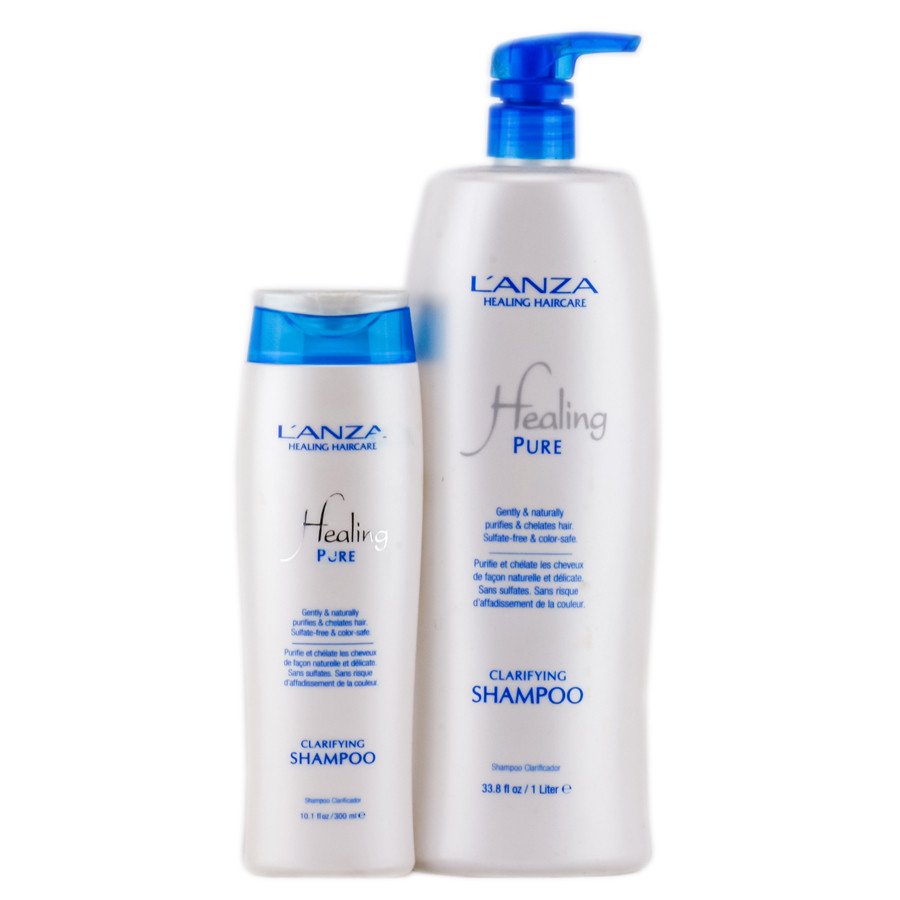
L’ANZA Healing ColorCare Clarifying Shampoo (10.1 fl oz) — chosen precisely because this tree’s dominant question was overuse. It sits at the gentle end of the category on purpose: sulfate-free and color-safe, so the reset doesn’t tax the color you’re protecting; and it clarifies and chelates in one bottle — phytic acid (rice-derived, the chelating agent) binds the minerals and metals behind hard-water dullness and swimmer’s tones, while the cleansing system lifts product film, so one product covers both buildup types this guide separated. Gugo bark extract provides the lather, and the brand’s Flower Shield Complex guards against fading. Use it on the schedule in the Quick Answer — every 2–3 weeks for most heads — with a deep conditioner after, every time. (Healing line: this series has used L’ANZA since Guide #5 and keeps the brand with eyes open about its per-product rates; the recommendation stands on the formula’s fit for this job.)
FAQ
How often should you use a clarifying shampoo?
Every 2–3 weeks for a typical head; weekly at most for very oily scalps, heavy product use or swimmers (chelating formula); monthly or less for dry, curly or freshly colored hair. Clarify on evidence — the coated, limp, dull signs — not just on schedule.
Can you overuse a clarifying shampoo? What happens?
Yes — it’s the category’s main failure mode. Too-frequent clarifying strips the oils hair needs along with the buildup, leaving it dry, frizzy, tangle-prone and, with classic sulfate-heavy formulas, fading your color early. The reset feeling comes from occasional use; chasing it weekly inverts it.
Should you shampoo twice with a clarifying shampoo?
Generally no. One thorough application — scalp focus, a minute of massage, a long rinse — does the job. A second pass is reserved for severe buildup and doubles the stripping. If every wash feels like it needs two, suspect mineral film (a chelating job) rather than product.
Is Dawn dish soap a good clarifying shampoo?
It strips effectively and kindly to nothing else: formulated for dishes, harsh on scalp, cuticle and color. Emergency folklore at best, and unnecessary — a purpose-built color-safe clarifier does the same job by design, without the damage profile.
What’s a good homemade substitute?
Partial ones. Baking soda is too alkaline for regular use (pH ~9) and can rough the cuticle; an apple-cider-vinegar rinse adds shine and smoothness but contains no surfactant, so it can’t remove silicone and product buildup. For actual buildup, a real clarifying wash is the substitute-proof answer.
What should you put on hair after clarifying?
Conditioner — ideally a deep-conditioning mask — every time, without exception. Clarifying removes the film and the softness margin together; the mask is the repayment. This pairing, plus the 2–3-week cadence, is most of what separates a reset from a strip.
The Bottom Line
A clarifying shampoo is a reset button with a user manual: match the tool to the buildup (product → clarify, minerals → chelate, both → a formula that does both), press it every two to three weeks rather than weekly, use one careful wash instead of two careless ones, repay the moisture immediately — and leave the dish soap in the kitchen, where its talents are properly appreciated. Do that, and the bottle lasts a year while everything else in your shower starts working again. Wave 5 closes next with the most-searched overnight promise of all: beauty sleep — what sleep actually does to skin, and what it doesn’t.
Sources & Further Reading
- Happy Head (medically reviewed) — “Can Hard Water Cause Hair Loss?” (calcium/magnesium deposition, chelating agents such as EDTA lifting mineral buildup, weekly-to-fortnightly chelating cadence): https://www.happyhead.com/blog/can-hard-water-cause-hair-loss
- Scalp Care Manual — hard-water reviews, Sept–Oct 2026 (the clarifying-vs-chelating distinction, mineral film mechanics, shower-filter limits): https://www.scalpcaremanual.com/blog/2026-10-15-hard-water-scalp-health.html
- Grazia (stylists Jeremy Pugh and Nina Rubel, via Vogue Philippines) — clarifying every 2–3 weeks, a chelating formula monthly in hard-water areas, always followed by hydration: https://www.graziamagazine.com/us/articles/goodbye-purple-shampoo-hairstylists-say-gray-hair-actually-needs-this-instead-25497/
- Cosmetify — L’ANZA Healing ColorCare Clarifying Shampoo product listing (sulfate-free, mineral/metal removal, color preservation, directions): https://www.cosmetify.com/lanza-healing-colorcare-clarifying-shampoo/
Affiliate disclosure: Glow & Vital participates in the Amazon Services LLC Associates Program and other affiliate programs. Links in this article are affiliate links — if you buy through them, we may earn a commission at no additional cost to you. Commissions never decide what we recommend; the reasoning for every pick is stated in the article itself. This content is educational and is not medical advice.