
The most-searched dandruff question in America is not really a question. It is a demand: “what kills dandruff fast?” — asked so often that it appears four separate times in this guide’s research tree, flanked by “faster” and “the fastest.” We understand the urgency; flakes on a dark shirt have ended good moods and job interviews. But the honest answer is the one this guide is built on: dandruff is not killed — it is managed, because the yeast behind it lives on every scalp, including yours, permanently. What you can do is diagnose your flake correctly, use the right active for the right number of weeks, and keep it quiet with a maintenance rhythm. That is slower than the internet promises, and it is also the only version that works.
The Quick Answer
First, identify the flake. Dandruff flakes are larger, white-to-yellowish and often oily, on a scalp that may look red or greasy. Dry-scalp flakes are small, white and dry, on tight-feeling skin that is usually dry elsewhere too. Buildup is grey, waxy residue from products. Then treat the cause: true dandruff responds to a medicated shampoo with one of the American Academy of Dermatology’s listed actives — zinc pyrithione, ketoconazole, selenium sulfide, salicylic acid, sulfur or coal tar — used on the scalp (not the hair), left on for up to 5–10 minutes, about twice a week for fine or oily hair and about once a week for coarse, curly or coily hair. Judge it at two to four weeks, not two days — and once clear, keep a once-a-week maintenance wash, because stopping entirely is how the flakes come back. Nothing honest works in one day.
Know Your Flake: Dandruff vs Dry Scalp vs Buildup
Three different problems shed white stuff onto your shoulders, and they want three different responses. Treating dry scalp with antifungal shampoo dries it further; moisturizing true dandruff feeds its cause. The differences that matter:
- Dandruff is an oil story. The scalp’s yeast, Malassezia, feeds on sebum; in people who react to it, skin cells turn over too fast and shed as larger, white-to-yellowish flakes that may cling to the scalp or hair. The scalp often looks oily or slightly red, and it itches. It tends to worsen when washes are stretched out — oil and yeast by-products accumulate.
- Dry scalp is a water story. The skin has lost moisture — cold, dry air, harsh cleansing, age — and sheds small, fine, white, dry flakes. The scalp feels tight rather than greasy, and the rest of your skin is often dry too. It improves with gentler washing and moisture, exactly the opposite prescription from dandruff’s.
- Buildup is a residue story: styling products, dry shampoo, silicones and mineral-heavy water layering into a grey, waxy film that flakes as it cracks. The fix is mechanical and chemical removal — a clarifying wash or a scalp exfoliant — which is why this library gave buildup its own guide (Guide #24).
- The impostor to respect: scalp psoriasis. Thick, silvery-white scale on well-defined reddish patches — sometimes extending past the hairline — is not dandruff, and neither is a red, patchy scalp with hair loss (possible ringworm). Both leave this guide’s territory and belong to a dermatologist.
What Actually Causes Dandruff
Dermatology’s working model has three ingredients, and you need all three: sebum (your scalp’s oil), Malassezia (a yeast that lives on virtually every adult scalp and eats that oil, releasing fatty acids as it feeds), and individual susceptibility (some people’s skin reacts to those fatty acids with inflammation and accelerated shedding; other people’s does not). Cleveland Clinic describes dandruff as the mildest form of seborrheic dermatitis — the same process that, further along the spectrum, produces greasy yellowish scale in the eyebrows, beard, behind the ears and on the chest, which is why “dandruff in my eyebrows and beard” is such a common search. It affects roughly half of adults at some point.
Two clarifications the folklore never makes. First, dandruff is not caused by poor hygiene — the AAD says so outright — and it is not contagious; you cannot catch someone else’s yeast sensitivity. Not washing makes it more visible, because oil and flakes accumulate, which is a different claim. Second, stress and cold, dry weather are recognized flare triggers — one reason this guide exists in a late-winter series.
“What Kills Dandruff Fast?” — The Honest Clock
Here is the timeline nobody selling a one-day cure wants printed. A medicated shampoo does not strip the yeast away in a wash; it suppresses its population and calms the skin’s reaction over repeated applications. Labels and dermatology guidance converge on the same clock: use the shampoo consistently for two to four weeks before judging it (the NHS suggests about a month). In the largest relapse study of ketoconazole shampoo, the win was not speed — it was what happened after: people who kept a once-a-week maintenance wash relapsed at 19% over six months, versus 47% on placebo. The treatment phase clears; the maintenance phase is the actual product.
The technique matters as much as the bottle, and most people get three details wrong:
- Apply it to the scalp, not the hair. The medicine’s workplace is the skin. Massage it into the scalp itself; with curly or coily hair, the AAD advises scalp-only application precisely because these actives can dry the lengths.
- Give it contact time. Some dandruff shampoos need to sit on the scalp for about 5–10 minutes before rinsing, per the AAD and the label. A 20-second lather-and-rinse is a perfume application, not a treatment.
- Match frequency to your hair. Fine, straight or oily: wash often — the AAD’s example is daily washing with the medicated shampoo twice a week. Coarse, curly or coily: wash as needed, medicated shampoo about once a week if tolerated. And if one active stalls, alternate to a different active rather than abandoning the category — the AAD’s explicit advice.
The Reset Step: Buildup, Exfoliation and the Weekly Rhythm
Between medicated washes, a flaky scalp accumulates the physical evidence: shed cells, sebum and product film. Removing that layer is not the treatment — no scrub kills a yeast — but it does two honest jobs: it clears the surface so the medicated shampoo reaches skin instead of residue, and it removes the visible flakes that make a managed scalp still look unmanaged. This is the role of the periodic deep cleanse: a clarifying shampoo (the mechanics are in Guide #24) or a salt-based scalp exfoliant worked in with fingertips — never nails — once a week or so, on the weeks your scalp asks for it. Think of the rhythm as a three-part week: medicated wash (the treatment), reset wash (the housekeeping), regular gentle wash (the ordinary days).
Which Oil Kills Dandruff? (None — and One Can Feed It)
The tree’s first branch asks which oil kills dandruff, and the answer is the guide’s second-most-unpopular claim: no cosmetic oil is an antifungal treatment. Oils do not reduce Malassezia the way ketoconazole or zinc pyrithione does — and there is a mechanistic catch: the yeast eats fatty acids, which is why dermatologists urge caution with heavy oil application on a dandruff-prone scalp, and why “moisturizing the flakes away” so often backfires on true dandruff. The partial exception is tea tree oil, the only oil with any trial evidence at all — a single study of a 5% tea-tree shampoo showed improvement over placebo — which makes it a legitimate ingredient to look for inside a formulated shampoo, not a reason to pour essential oil on your scalp (undiluted essential oils are a classic route to contact dermatitis, a brand-new itch on top of the old one). If your flakes are dry-scalp flakes, oils and moisture genuinely help — which is, again, why the diagnosis comes first.
Habits That Sabotage the Treatment
- Scratching and scraping. The tree asks twice whether you can scrape or scratch the flakes off. You can remove a flake that way; you will also wound the barrier underneath it, invite infection, and — if the scale is actually psoriasis — provoke exactly the flare you are trying to calm. Flakes leave when the skin calms down, not when they are evicted.
- Quitting at the first clear week. Looking clear is the treatment working, not the condition ending. The relapse data above is the receipt.
- Declaring failure at day three. The honest clock is two to four weeks. Judging earlier manufactures “nothing works for me” out of ordinary impatience.
- Going bald as a strategy. The tree genuinely asks. Shaving removes hair, not skin, oil glands or yeast — seborrheic dermatitis happily occurs on bald scalps and in beards. A shorter cut can make treatment easier to apply; it is not a cure.
- Treating the eyebrows like a separate country. Flakes in the brows, beard or behind the ears are the same spectrum; they need their own (gentler, face-appropriate) antifungal care and, if stubborn, a dermatologist — not scalp shampoo on your face.
The Liver Question, the Virus-Sharing Question, and Other Folklore
One branch of the research wanders into whether dandruff is a liver issue or a sign of internal disease. The honest answer: dandruff is not a recognized symptom of liver trouble, and ordinary dandruff needs no internal workup. What is true — and worth knowing — is the narrow exception: seborrheic dermatitis that is unusually severe, sudden or resistant to correct treatment is seen more often in people with weakened immune systems or certain neurological conditions (Mayo Clinic and Cleveland Clinic both note the association), so that specific pattern is a reason to involve a doctor, not because your liver is failing, but because the scalp is sometimes the first place a bigger story shows. And because the tree asks three times, a one-line service: “the devil’s dandruff” is decades-old slang for cocaine and, in New England, a joking name for late-season snow. It has nothing to do with your scalp, and nothing in this guide applies to it. Finally, the viral “why is Gen Z losing hair?” — itching and inflammation can come with temporary shedding during a flare, and Cleveland Clinic notes that shedding linked to seborrheic dermatitis generally recovers once the scalp settles; persistent or patchy hair loss is its own problem and deserves its own appointment.
When It’s Not Dandruff — See a Dermatologist
Book the appointment if: four weeks of correct, consistent over-the-counter treatment brings no improvement; the scale is thick, silvery or sits on sharply defined red patches (psoriasis until proven otherwise); there is patchy hair loss, crusting or sores (possible ringworm or infection — ringworm of the scalp needs oral medication, not shampoo); the itch is severe or the skin is broken or weeping; or you have a weakened immune system, in which case the AAD advises asking a doctor before starting new treatments. A scalp that does not read the script is giving you information — the correct response is a professional diagnosis, not a fifth shampoo.
One product follows — the reset step of this routine, presented honestly: it is housekeeping, not the medicine. Glow & Vital may earn a commission through the link below; the full disclosure is at the end of this guide.
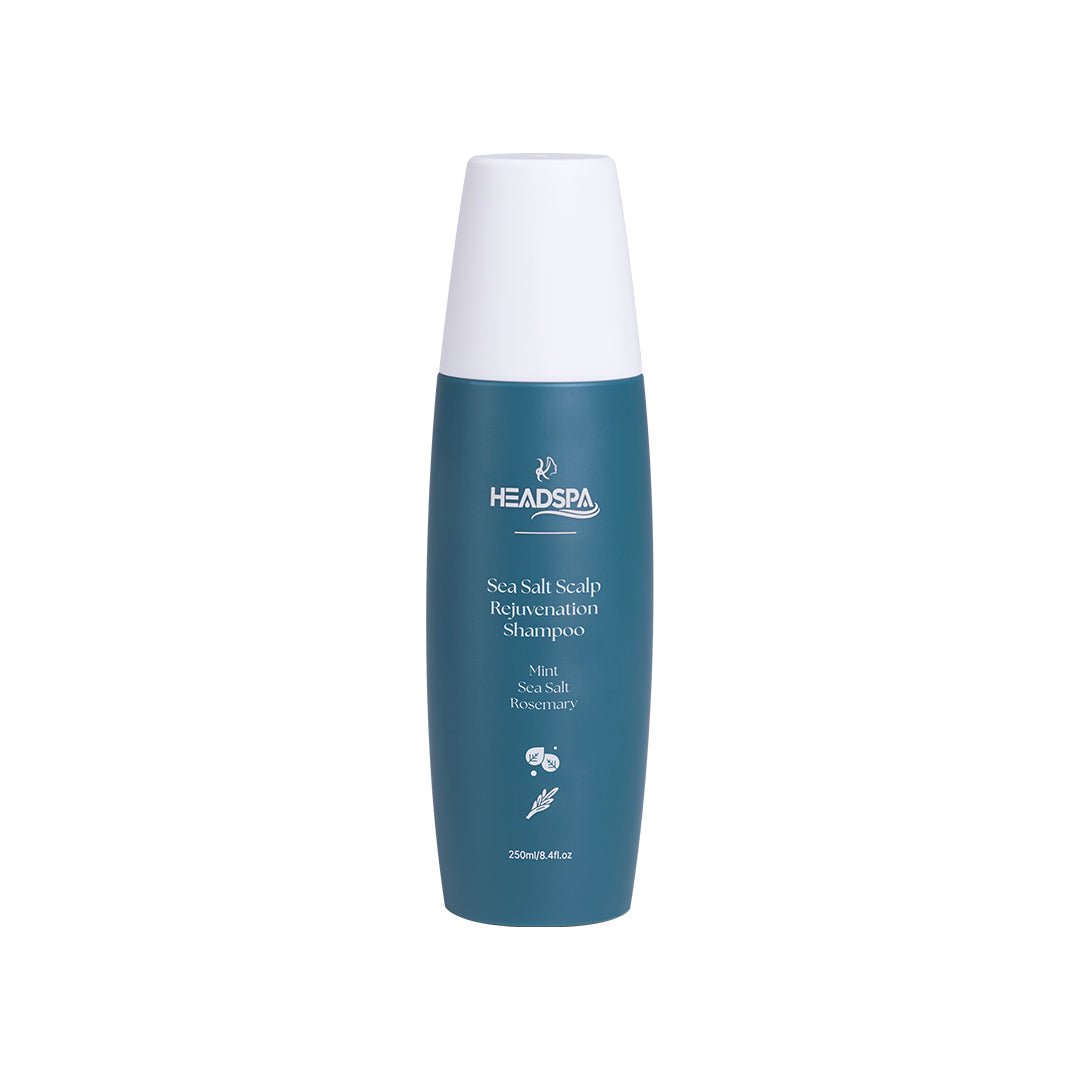
K-HEADSPA Sea Salt Scalp Rejuvenation Shampoo — 250g / 8.8 oz
The reset step: a sea-salt exfoliating cleanse that lifts flakes, oil and product film off the surface, so the medicated wash can reach the skin.
- Sea salt physically exfoliates shed cells and buildup — the housekeeping half of this guide’s routine, 2–3 times a week per the brand’s own directions
- Massage in, leave 2–3 minutes, rinse — then let your medicated shampoo do the antifungal work on its own days
- Honest limit, stated on purpose: this is not a medicated dandruff treatment and does not replace one
$38 at K-HEADSPA
Check price at K-HEADSPAFrequently Asked Questions
What is the fastest honest way to get rid of dandruff?
A medicated shampoo with an AAD-listed active, applied to the scalp with 5–10 minutes of contact, on the schedule your hair type needs — with visible improvement typically judged at two to four weeks, not days. Anything promising one day is selling you flake removal, not dandruff control; the flakes return because the process underneath never changed.
Which dandruff shampoo active is best?
The AAD does not crown one. Zinc pyrithione, ketoconazole, selenium sulfide, salicylic acid, sulfur and coal tar all appear on its list, they work by different mechanisms, and the official advice when one stalls is to alternate to a different active. Ketoconazole has the strongest maintenance-trial data; the best active for you is the one your scalp tolerates consistently for a month.
Can I just scrape or scratch the flakes off?
You can, and you should not. Scraping wounds the skin barrier, risks infection, and can trigger a psoriasis flare if that is what the scale actually is. Flakes release on their own as the underlying process calms — that is the treatment working visibly.
Will dandruff stop if I shave my head?
No. The yeast lives on skin, not hair, and the oil glands remain — seborrheic dermatitis occurs on bald scalps and in beards. Shorter hair can make medicated shampoo easier to apply evenly, which is a real but modest benefit.
Is dandruff a sign of liver problems?
No — it is not a recognized symptom of liver disease. The narrow exception: seborrheic dermatitis that is suddenly severe or refuses correct treatment is associated with weakened immunity and some neurological conditions, which is why that pattern earns a doctor’s visit. Ordinary dandruff is a skin-surface story.
How often should I wash my hair if I have dandruff?
By hair type, per the AAD: fine, straight or oily hair — wash often (their example is daily), with the medicated shampoo about twice a week. Coarse, curly or coily hair — wash as needed, medicated shampoo about once a week if tolerated, applied to the scalp only. Once clear, a once-a-week medicated wash is the maintenance rhythm that keeps it clear.
The Bottom Line
A calm scalp is a system, not a kill shot. Name your flake before you treat it — dandruff, dry scalp and buildup are three different problems wearing the same white coat. Treat true dandruff with a real active, real contact time and a real four-week trial; keep the surface honest with a weekly reset; then stay on the once-a-week maintenance rhythm that the relapse data says is the whole ballgame. Fast is a marketing word. Staying clear is the achievement — and it is entirely available at ordinary, patient speed.
Sources & Further Reading
- American Academy of Dermatology — How to Treat Dandruff (the six actives, scalp application, 5–10 minute contact, frequency by hair type, “not caused by poor hygiene”).
- Cleveland Clinic — Seborrheic Dermatitis: Symptoms, Causes & Treatment (Malassezia mechanism; dandruff as its scalp form; a lifelong, manageable condition).
- US Trichology Institute — Dandruff vs Dry Scalp vs Buildup (the three-way flake comparison, drawing on AAD and Cleveland Clinic descriptions).
- Hair-Care.in — Why Does Dandruff Keep Coming Back? (the maintenance-schedule evidence, including the six-month relapse trial: 47% placebo vs 19% once-weekly ketoconazole).
Affiliate disclosure: Glow & Vital is reader-supported. Some links in this guide — including the K-HEADSPA link above — are affiliate links, and we may earn a commission if you buy through them, at no extra cost to you. That is how this library stays free. We recommend products by fit and evidence, never by commission rate — and when a product’s role is housekeeping rather than treatment, we say exactly that, as we did above.