
BB, CC, tinted moisturizer, foundation, cushion — the base-makeup aisle has become an alphabet exam nobody studied for. The tubes all promise some mix of coverage, skincare and SPF, the prices overlap completely, and the difference between the right one and the wrong one is usually about ninety seconds of understanding what the letters actually mean.
Here’s the honest version: what each product is built to do, how much they really cover, the one caveat that applies to all of them (SPF), and a simple way to pick based on what you see in the mirror.
Quick note: the product picks in this guide include affiliate links — our full disclosure is at the end of this article.
The Quick Answer
BB cream = skincare first, tint second: sheer-to-light coverage, hydration and extras — best when your skin is fairly even and you want one fast layer. CC cream = color correction first: aimed at redness, dullness and discoloration, usually with more pigment than a BB. Foundation = coverage first: the widest shade ranges and the highest coverage, in liquid, cream or cushion form. And tinted moisturizer is the sheerest of all — moisturizer with a whisper of color. One warning for every category: none of their SPFs replace real sunscreen (we explained the math in our cushion guide; it applies here too).
The Part Nobody Tells You: The Letters Aren’t Regulated
There is no official standard a product must meet to call itself a BB or a CC cream. The letters describe an intention, not a specification — which is why one brand’s CC cream covers like a foundation and another’s barely tints. So read the letters as a hint about what the formula prioritizes, and read the coverage and finish claims on the tube as the facts. Everything below is about what each category typically does.
BB Cream: The Skincare-Forward One
BB stands for “beauty balm” (or “blemish balm”). The concept began as a soothing post-treatment balm in German clinics, became a phenomenon in South Korea, and arrived in the West as the original multi-tasker: moisturizer + primer + light coverage + often SPF and antioxidants in a single tube.
- Coverage: sheer to light (some build to medium). It blurs; it does not hide.
- Finish: usually dewy to natural; can be too shiny for oily skin without powder.
- Best for: even-ish skin, dry or normal skin, fast mornings, “no-makeup makeup.”
- Watch out for: limited shade ranges are common — many BBs come in a handful of shades that run light.
If your skin mostly behaves and you want to look rested in one step, this is your category.
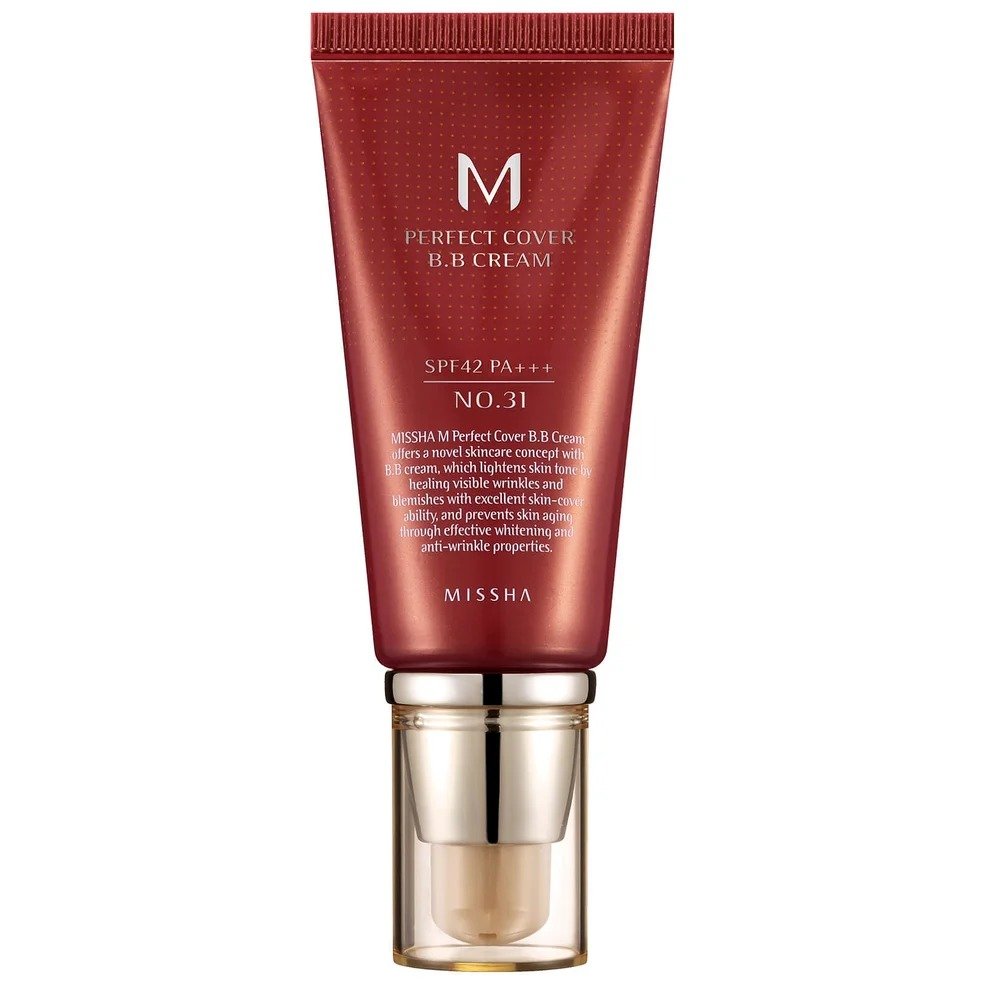
MISSHA M Perfect Cover BB Cream (SPF 42 PA+++) — our hero pick: the reference BB — the Korean classic that defined the category in the West. Light-to-medium buildable coverage, a hydrating skincare base, high SPF on the label (still: sunscreen first), and one of the better shade ranges in BB-land. The tube in our link is shade No. 27 Honey Beige — pick your shade on the page.
CC Cream: The Color-Corrector
CC stands for “color correcting” (or “color control”). CC creams were the industry’s answer to BB’s weakness: not enough help for uneven tone. They lean on pigment and light-diffusing particles to neutralize redness, sallowness and dull patches, and they tend to be a bit thicker, closer to foundation in texture.
- Coverage: light to medium, occasionally full — the widest variance of any category.
- Finish: natural to matte; the correcting pigments often cut the dewy look.
- Best for: redness (rosacea-prone cheeks, broken capillaries), dull or sallow tone, old acne marks, melasma-ish unevenness you want to quiet rather than coat.
- Watch out for: color-correcting claims are about tone, not texture — no cream smooths a raised blemish away.
If the first thing you see in the mirror is a color problem, start here.
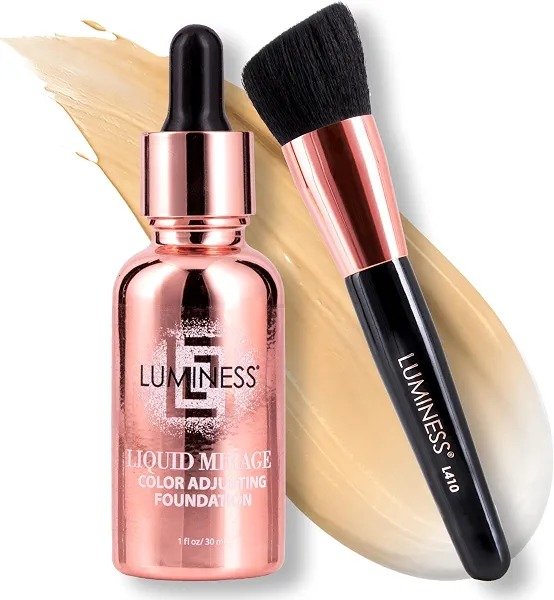
LUMINESS Liquid Mirage Color Adjusting Foundation 3PC Kit — the CC-brained foundation: a color-adjusting liquid that goes on and adapts toward your tone, sold as a kit with primer and brush. For the reader whose problem is uneven color and who wants foundation-level coverage with a self-matching assist (and SPF 50 on the label — same caveat).
Tinted Moisturizer & Tinted SPF: The Sheerest Option
A tinted moisturizer is exactly what it sounds like — moisturizer with a dash of pigment. Coverage: a hint. It’s the right product when your skin needs hydration and the faintest evening-out, and the wrong one when you want anything covered. Its close cousin, tinted SPF, flips the priority: a real sunscreen (with a proper SPF rating and an amount you can actually apply generously) that carries enough tint to replace base makeup on low-key days — the one product in this guide whose sun protection you can genuinely count on, because it’s designed to be applied like sunscreen, not like foundation.
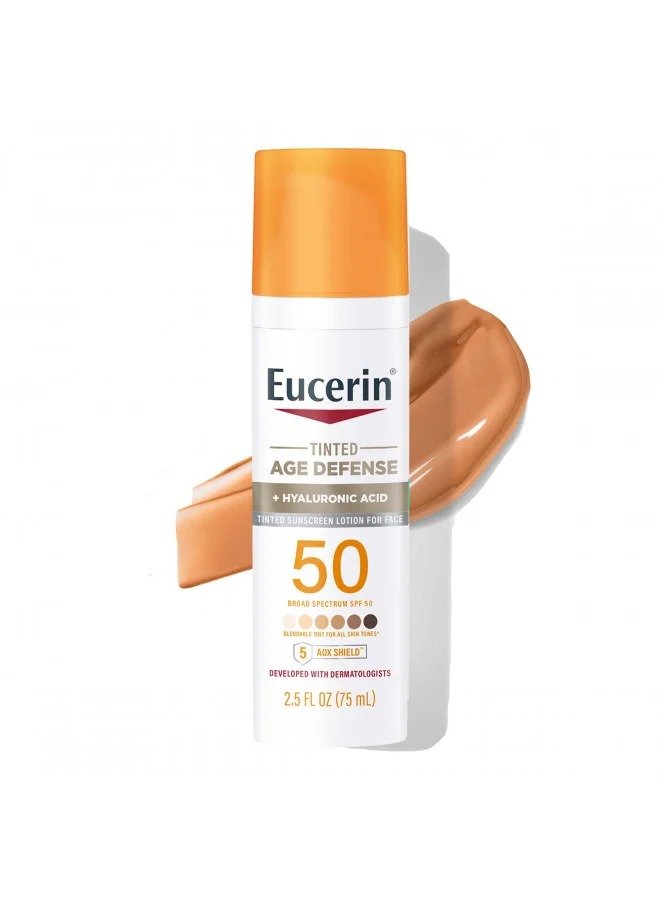
Eucerin Sun Tinted Age Defense SPF 50 — the tinted-SPF route: a dermatologist-developed sunscreen first, tint second, with hyaluronic acid and a blendable tint designed to work across skin tones. This is the “one layer” product whose protection is real — because you apply it like sunscreen.
Foundation: The Coverage-First One
Foundation is the category built purely to cover and last: the most shades (with true undertone matching), the most finishes, and coverage from medium to genuinely full. It asks more of you — shade matching, application technique, setting — and gives the most back. Modern foundations include formats we cover elsewhere in this series: bottled liquids and cushion foundations (our previous guide), which deliver foundation in thin, buildable layers.
- Best for: events and photos, significant discoloration or acne to cover, long wear days, anyone whose shade never exists in BB/CC ranges.
- Watch out for: the heavier the coverage, the more skin prep (moisture, primer) and blending it demands.
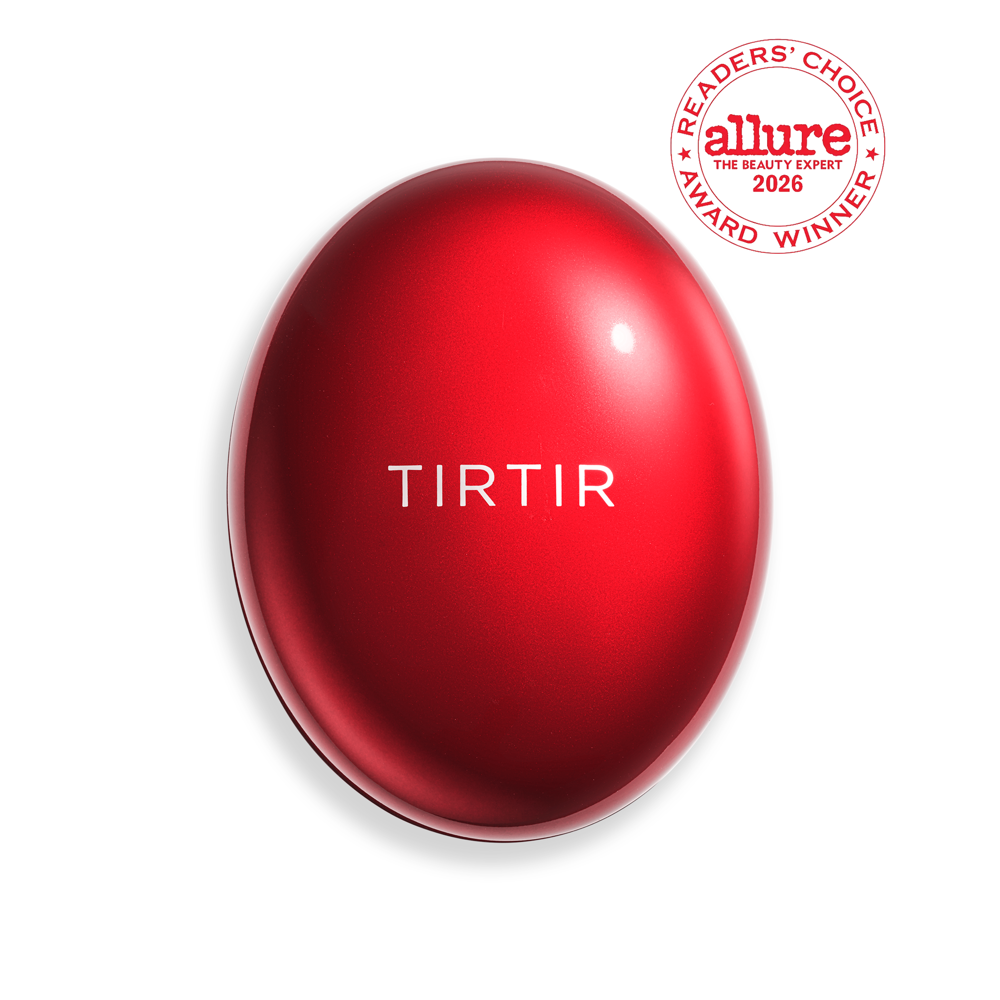
TIRTIR Mask Fit Red Cushion Foundation — from our cushion guide: when the answer is “foundation, but easier,” the satin-finish cushion delivers buildable medium coverage in pressed thin layers, with a numbered shade range that runs wider than most BBs. Full breakdown in the previous guide in this series.
The Decision, in One Pass
Ask, in order:
- What’s my main issue? Nothing much → tinted moisturizer or BB. Color (redness/dullness) → CC. Stuff to cover (spots, marks, major unevenness) → foundation.
- How much time do I give it? One step, fingers, out the door → BB/CC. A real routine → foundation.
- What’s my skin type? Dry → BB’s hydration helps. Oily → matte CC or foundation + setting (our primer/spray guide is next in this series). Sensitive → fewer, simpler formulas; patch-test.
- Does my shade exist? If BB/CC ranges don’t include you, foundation (or a cushion with a wide range) is not a compromise — it’s the answer.
And the SPF Caveat (Again, Briefly)
Most BBs, CCs and foundations advertise SPF — and all of them are applied far too thinly for that SPF to perform as labeled (the quarter-teaspoon problem from our cushion guide). Wear real sunscreen underneath, or choose a tinted SPF as your base on the days when one layer is all you want. SPF claims on base makeup are a bonus, never the plan.
Frequently Asked Questions
Can BB or CC cream replace foundation?
For light-coverage days, yes — that’s their job. For full coverage, long wear or shade precision, no: that’s foundation’s job, and no letter soup changes it.
Can I use BB cream every day?
Yes — it’s designed for daily wear. Remove it properly at night (our skincare routine guide covers cleansing), and it’s just makeup.
Which is better for mature skin?
Hydration usually beats coverage as skin matures — heavy foundation settles into lines. A hydrating BB (or a CC with real pigment for age spots, applied thinly) is the common expert recommendation; moisturize well underneath either way.
What’s a DD cream?
Mostly a marketing sequel (“dynamic do-all” / “daily defense”). There’s no agreed definition that separates it from BB/CC — a good reminder that the letters are hints, not law.
Do I need primer under BB or CC cream?
Optional. BBs are built to be a one-step product (many include priming ingredients); add primer only if you have a specific job for it — oil control or blur — which our next guide in this series covers.
The Bottom Line
Don’t shop the alphabet; shop the job. Even skin + speed → BB. Color problems → CC. Real coverage or a hard-to-find shade → foundation. Almost nothing to fix → tinted moisturizer or a tinted SPF (the only one whose sun protection counts). And whatever you choose: sunscreen is its own step.
Sources & Further Reading
- Skincare.com (L’Oréal) — BB Cream vs. CC Cream vs. Tinted Moisturizer: the category definitions — tinted moisturizer for sheer hydration, BB as the all-in-one beauty balm, CC for color correction with typically more coverage. https://www.skincare.com/expert-advice/ask-the-expert/bb-cream-vs-tinted-moisturizer?amp=true
- Kaylin’s Kit — The Difference Between CC Creams, BB Creams and Tinted Moisturizers: the coverage ladder and why sheer products’ SPF is applied too thinly to perform. http://www.kaylinskit.com/2014/09/article-difference-between-cc-creams-bb.html?m=1
- Expert roundup — The difference, explained by experts: makeup artists on using BB/CC as foundation, primer under CC, and why “DD cream” is a marketing term with no quantifiable definition. https://make.s3.uk.io.cloud.ovh.net/the-difference-explained-by-experts.html
- Prevent Cancer Foundation — Is SPF in Makeup Enough to Protect My Skin? (also cited in our cushion guide): the quarter-teaspoon math behind the SPF caveat. https://preventcancer.org/article/my-makeup-contains-spf-do-i-still-need-to-wear-sunscreen/
Affiliate Disclosure
Glow & Vital is reader-supported. Some links in this article are affiliate links, which means we may earn a commission if you buy through them — at no additional cost to you. As an Amazon Associate, we earn from qualifying purchases. Affiliate relationships never determine which products we recommend; picks are based on ingredient research, formulation quality and fit for the guide’s purpose. This article is educational and is not medical advice.